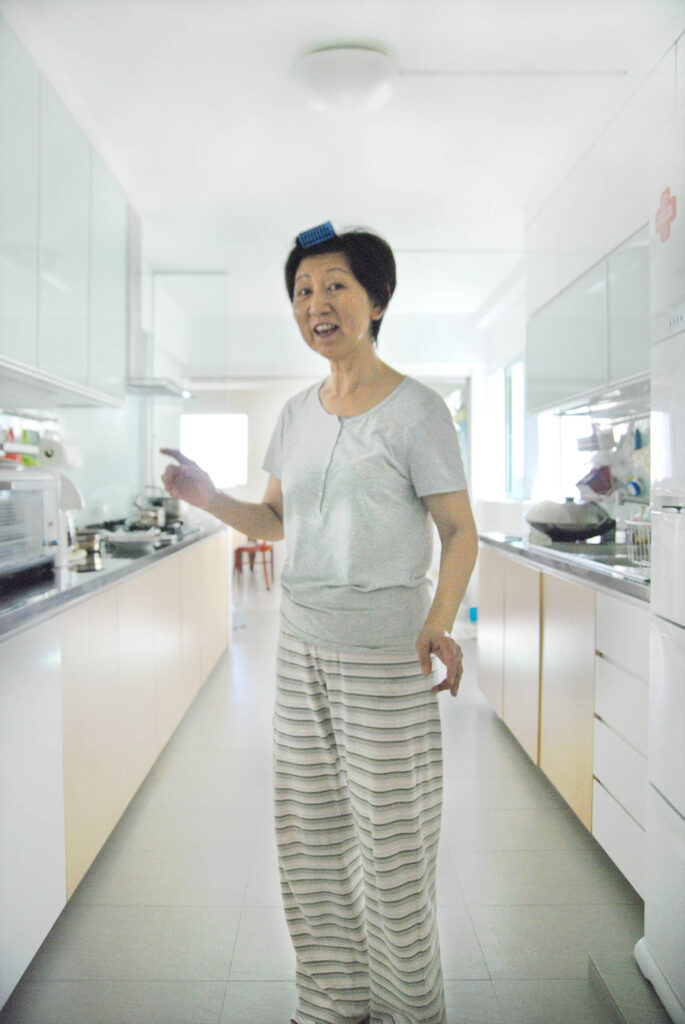
In Cantonese opera, men and women spar over love, money, and politics. A similar drama unfolded in my grandparents’ home, but the topic that triggered it was cooking. My grandfather liked to brag about his mastery in cooking. While sitting cross-legged on a single-seat sofa, with a cigarette between his fingers, he cried, “Your grandmother doesn’t know a thing!” Then he let out a chuckle.
My grandmother uttered a feeble “humph,” but she was no docile sheep of a woman as many in her generation were expected to be. One day, when I asked her to teach me how to make ngoh hiong, a Hokkien meat roll that was the mainstay of our dwindling family dinners, she took the opportunity to show her husband of 60 years who called the shots in the family. To demonstrate how she would marinate the ground pork, she got my 86-year-old grandfather walking up and down the kitchen to fetch her ingredients. When he looked uncertainty, she belittled him mercilessly. “Of course you have to wash the bean curd! Where is the oil? What are you looking for? The bean curd skin is right here!”
My grandfather spewed a couple of Hokkien vulgarities—he could cook himself and was the master of vegetable stew and pig’s stomach pepper soup. But he was accommodating, so my grandmother marinated the meat, texturized it with chopped water chestnuts and shallots, and rolled it in bean curd skin. Seven minutes later, the meat roll emerged from the steamer in one piece. Was this a metaphor for their marriage?